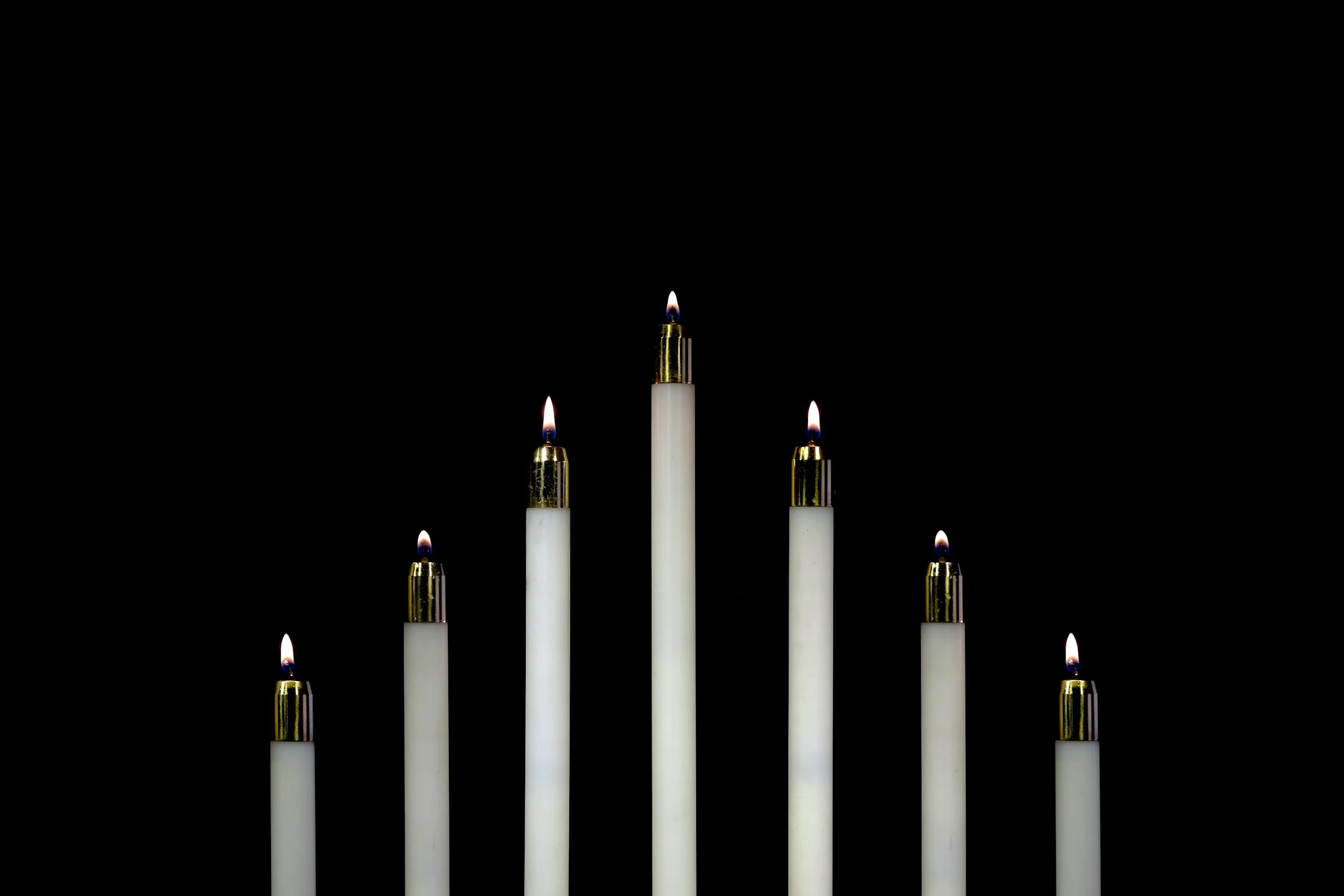
Tenebrae
For centuries the name Tenebrae (Latin for “darkness” or “shadows”) has been applied to the single extended service that combines the ancient monastic Night Office (Matins) and early Morning Prayer (Lauds). In the medieval period it became particularly associated with Holy Week.
In the Anglican Church, Tenebrae is usually observed only on Wednesday night, so that the liturgies for Maundy Thursday and Good Friday may find their place as the principal services of those days. By drawing upon material from each of the former three offices of Tenebrae, this service provides an extended meditation upon, and a prelude to, the events in our Lord’s life between the Last Supper and the Resurrection.
The most conspicuous feature of the service is the hearse – a triangular candelabra. Over the course of the service, candles are extinguished one by one after each psalm reading until only a single candle, considered a symbol of our Lord, remains.
This final candle – the “Christ candle” is not extinguished but hidden, representing Christ’s death and burial and the apparent victory of the forces of evil. At the very end, a loud noise called the strepitus is made, symbolizing the earthquake at the time of the resurrection (Matthew 28:2), the hidden candle is restored to its place, signifying the hope of the resurrection, and by its light all depart in silence.